Environment and Climate Change

Sustainable and responsible use of natural resources is essential for strong economic development and lasting poverty reduction. Effective resource management calls for an interdisciplinary approach that integrates physical, biological, economic and social perspectives, and recognises the growing risks posed by climate change and environmental degradation.

Population growth and unsustainable economic development are putting unprecedented pressure on air, water, soil, ecosystems, and biodiversity. Climate change, driven largely by fossil fuel use, land use, and ecosystem degradation (incl. deforestation), is intensifying these pressures and undermining long-term environmental sustainability and climate resilience.

Low-income communities are among the most vulnerable to the impacts of climate change. They often depend directly on natural resources for their livelihoods and are more exposed to extreme weather events, pollution, and slow-onset changes such as droughts and sea-level rise. Many lack the financial and technical capacities needed for effective climate change adaptation, disaster risk reduction and recovery.

Given the complexity and cross-cutting nature of today’s environmental challenges, a systems-oriented approach to environmental management and socio-economic planning is critical. PEM helps partners integrate climate and environmental considerations into policy development, planning, budgeting and implementation, including through nature-based solutions, just energy transitions and improved management of climate-related loss and damage.

Our work aligns with the UN Sustainable Development Goals, in particular SDG 6 – Clean Water and Sanitation, SDG 7 – Affordable and Clean Energy, SDG 12 – Responsible Consumption and Production, SDG 13 – Climate Action, SDG 14 – Life Below Water and SDG 15 – Life on Land.


What we do

Our areas of expertise include:

  • Natural resource management (NRM), sustainable land use, and ecosystem conservation. We help partners plan how land, forests and other natural resources are used so that economic activities can grow without depleting the ecosystems people depend on. This includes support for policies, regulations and local practices that protect biodiversity and maintain vital ecosystem services.
  • Climate change (CC), climate resilience and disaster risk reduction. We design and evaluate programmes that help countries and communities prepare for and respond to climate-related shocks, such as floods, droughts, and storms. This ranges from climate risk assessments and early warning systems to locally led adaptation measures and nature-based solutions.
  • Water, Sanitation and Hygiene (WASH). We work to improve access to safe drinking water, sanitation, and hygiene services, especially for poor and marginalised groups. Our support covers[JV2.1] sector strategies, investment planning, performance monitoring and infrastructure feasibility studies, design and supervision to ensure services are reliable, affordable, and climate resilient.
  • Water resource management (WRM). We assist governments and basin organisations in managing rivers, lakes and groundwater in ways that balance competing demands from households, agriculture, industry and ecosystems. This often involves integrated water resources management, allocation rules and cooperation across administrative boundaries.
  • Sustainable energy and renewable energy solutions. We contribute to a just transition to cleaner energy systems by supporting formulation, quality assurance, and evaluation of programmes in areas such as energy access, energy efficiency, and renewable energy. This includes looking at how energy transition and investments affect vulnerable groups, jobs, and long-term climate goals.
  • Sustainable Consumption and Production (SCP). We work to improve the use of products and services that meet basic needs and improve quality of life, while minimizing the use of natural resources, toxic material and pollutant emissions over their life cycle.

How we work

  • Formulate and appraise programmes and projects at global, regional, national, and subnational levels that integrate environmental and climate objectives.
  • Undertake regulatory framework and institutional analysis, as well as capacity development, to strengthen public and private stakeholders.
  • Conduct reviews and evaluations to assess the effectiveness of climate and environment interventions, identify successful approaches, and generate practical lessons for scaling and replication.
  • Facilitate cross-sector coordination and development of sector-wide approaches that mainstream environment, climate and energy considerations across policies and investment programmes.
pemea

Poverty and social impact assessment (PSIA)

Services Evaluation
Region Africa
Client Tanzania Ministry of Energy and Minerals
End Year 2026
Contract Value Small contract
hydro1

Socio-economic survey for the Ruhuhu multi-purpose hydropower project for 2 wards in Ludewa and Nyasa Districts (Njombe Region)

Services Technical Assistance
Region Africa
Client WEMA Consult
End Year 2026
Contract Value Small contract
wwf1

Situation analysis and development of the project document for Rufiji-Mafia-Kilwa Seascape Programme

Services Programme Design
Region Africa
Client WWF
End Year 2026
Contract Value Small contract
Formulation of DEPP IV – Framework Programme on Danish Energy Partnership Programmes with India, Kenya, and Brazil

Formulation of DEPP IV – Framework Programme on Danish Energy Partnership Programmes with India, Kenya, and Brazil

Services Programme Design
Region Global
Client Danish Energy Agency
End Year 2024
Contract Value Medium contract
Evaluation of EU support on the waste management and urban wastewater treatment in the Western Balkans region scaled

Evaluation of EU support on the waste management and urban wastewater treatment in the Western Balkans region (2016 – 2022)

Services Evaluation
Region Global
Client European Union
End Year 2024
Contract Value Large contract
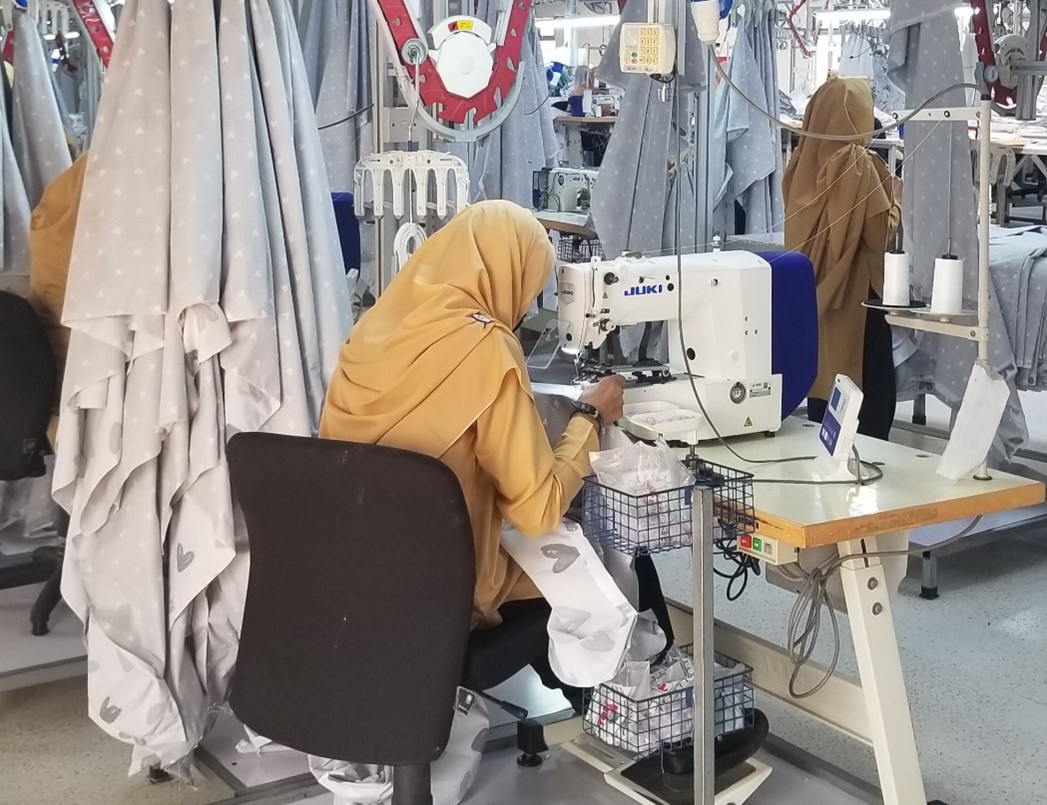
Improvement of labour social and environment standards in the Pakistani textile industry Pakistan

Improvement of labour-, social- and environment standards in the Pakistani textile industry, Pakistan

Services Evaluation
Region Asia
Client German Corporation for International Cooperation
End Year 2024
Contract Value Medium contract
Formulation of renewed Danish support to the OECD Clean Energy Finance and Investment Mobilisation CEFIM Programme 2024 2028 scaled

Formulation of renewed Danish support to the OECD Clean Energy Finance and Investment Mobilisation (CEFIM) Programme, 2024-2028

Services Programme Design
Region Global
Client Danish International Development Agency
End Year 2024
Contract Value Small contract
Support to start up of the Assela Windfarm Project Construction Ethiopia scaled

Support to start-up of the Assela Windfarm Project Construction, Ethiopia

Services Technical Assistance
Region Africa
Client Investment Fund for Developing Countries
End Year 2024
Contract Value Medium contract
The Cool Coalition

Appraisal of the Danish support to the Cool Coalition 2024-2026

Services Programme Design
Region Global
Client Danish International Development Agency
End Year 2024
Contract Value Small contract
Terminal reviews of two GEF projects Supporting Sierra Leone with the Shift to Electric Mobility and Leapfrogging Tunisias lighting market to high efficiency technologies 1 scaled

Formulation of renewed Danish support to the Energy Sector Management Assistance Program

Services Programme Design
Region Global
Client Danish International Development Agency
End Year 2024
Contract Value Small contract
Newsletter